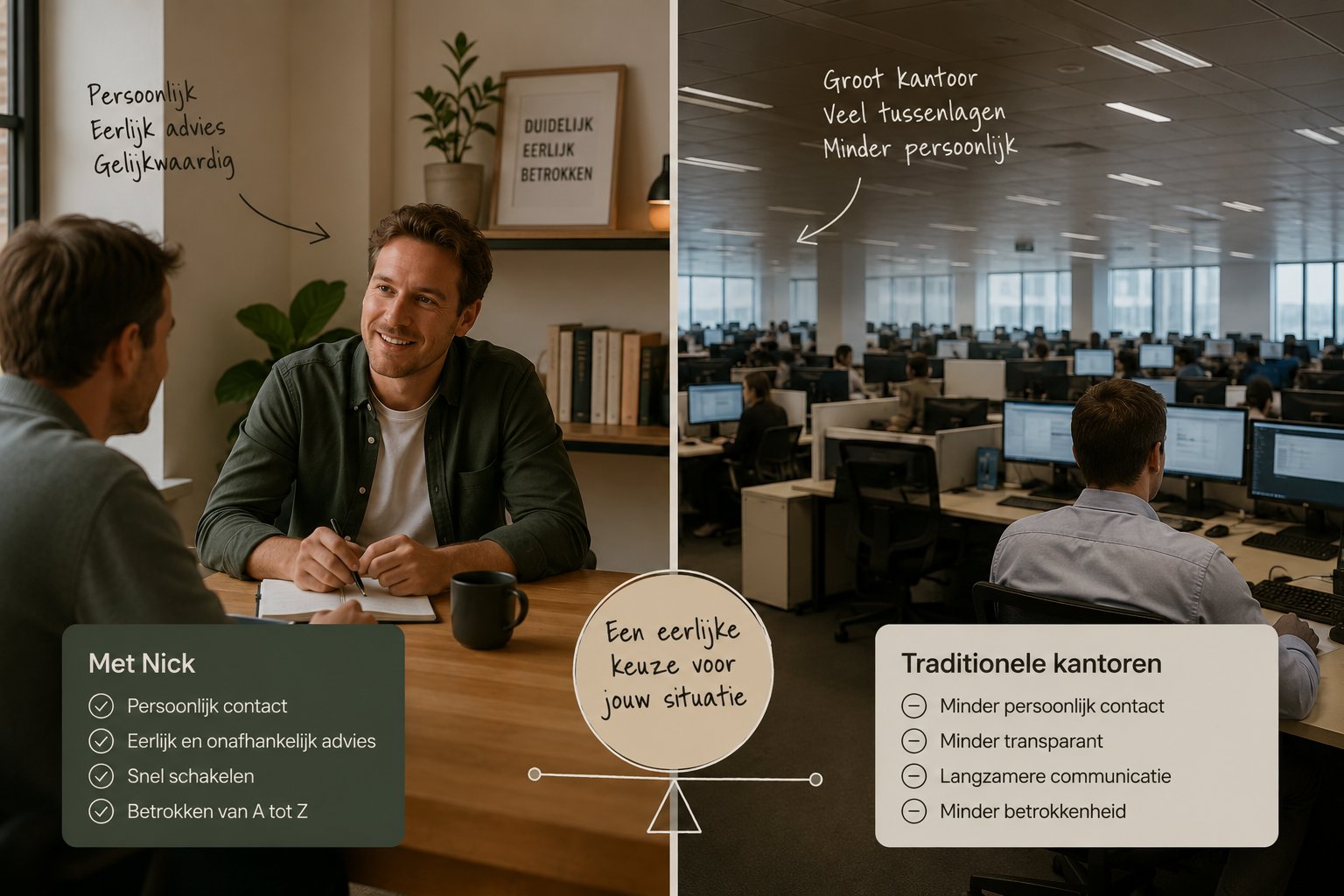

You are looking for an IT freelancer, but where do you start? Do you post an assignment on a platform, ask your network, or engage an agency? Each channel has its strengths and weaknesses, and the best one depends on your situation.
In this article I line up the five main ways to find an IT freelancer. For each channel you read the honest pros and cons and who it suits. So you do not just pick a channel, but the channel that fits your assignment.
This blog is for clients: IT managers and hiring managers looking for capacity who want to choose the best route.
Honest disclosure: Maedium is itself an IT intermediary, so one of the channels below is my own trade. I therefore also honestly name when another channel suits you better.
What ways are there to find an IT freelancer?
There are roughly five channels: your own network, professional network platforms, freelance marketplaces, large staffing agencies, and specialised intermediaries. Each differs in reach, quality, speed, cost and how much work it takes off your hands.
Below I walk through them one by one. No channel is the best by definition; it depends on what you seek, how much time you have and how important compliance is.
1.Your own network
Finding a freelancer via your own network or a colleague's recommendation is often the fastest and cheapest route. You get someone with a reference you trust, without a fee. The downside: your network is limited, and the best freelancers are often already taken.
Advantages
- No or low cost
- Trust through a personal recommendation
- Fast if you know the right person
Disadvantages
- Limited reach: you fish in a small pond
- No help with Dutch DBA Act compliance
- Hard if you seek a scarce or specific profile
Suits: clients with a strong IT network and a not-too-specialist need.
2. Professional network platforms
On professional network platforms you can actively search for freelancers and approach them directly. The reach is large and you immediately see someone's background. The downside: you do all the work yourself, from searching to screening, and you have no certainty about quality or compliance.
Advantages
- Large reach and many profiles
- You see work experience and recommendations directly
- No intermediary fee
Disadvantages
- Time-consuming: searching, approaching and screening yourself
- No quality guarantee or pre-selection
- No help with contracts or Dutch DBA Act compliance
Suits: clients with time to recruit themselves and enough knowledge to assess profiles.
3. Freelance marketplaces
On freelance marketplaces you post an assignment and freelancers respond themselves. You quickly get many responses and have choice. The downside: quality varies widely, you have to filter yourself, and you must arrange the compliance side entirely on your own.
Advantages
- Quickly many responses to your assignment
- Lots of choice in profiles and rates
- Handy for defined, shorter jobs
Disadvantages
- Variable quality; lots of filtering needed
- You carry the Dutch DBA Act risk yourself
- Little personal guidance or aftercare
Suits: clients with a defined job who want to filter themselves and knowingly accept the compliance risk.
4. Large staffing agencies
A large staffing agency delivers capacity at volume, often with people employed or a large pool. Handy if you need several people at once. The downside: it is usually more expensive, less personal, and you are one client of many.
Advantages
- Strong for large or broad capacity needs
- Many people available, also at short notice
- Compliance and continuity often well arranged
Disadvantages
- Usually higher costs
- Less personal; you are one of many clients
- Less tailoring for a specific, scarce profile
Suits: clients who need several engineers at once or quickly seek a lot of capacity.
5. Specialised IT intermediaries
A specialised intermediary searches their network specifically for the profile that fits you, and arranges the match, contracts and compliance. You pay a fee, but save time and risk. The downside: you depend on the quality and size of their network.
Advantages
- Targeted pre-selection on quality and match
- Personal guidance and short lines
- Help with Dutch DBA Act compliance; with the intermediary construction they take on the risk
- Replacement if someone drops out
Disadvantages
- You pay a fee, usually 10 to 15 percent
- Dependent on the intermediary's network
- Not set up for large volumes at once
Suits: clients seeking a scarce or specific profile, with little time, or wanting certainty on compliance. Want to go deeper on this? Read our honest review of working with an IT intermediary.
Which way suits you best?
There is no universal winner. Have a strong network and a simple need, start there. Have time and knowledge to recruit, then platforms and marketplaces work. Seek volume, look at a large staffing agency. Seek a scarce profile with certainty on compliance, then a specialised intermediary is logical.
Often you combine channels. You first ask your network, and engage an intermediary if that yields nothing. The main thing is to choose the channel that fits the scarcity of your profile, your available time and your risk appetite.
Frequently asked questions about finding an IT freelancer
What is the fastest way to find an IT freelancer?
Your own network is often fastest, provided you know the right person. After that, a specialised intermediary is usually faster than searching yourself, because they search a ready network specifically. Recruiting yourself via platforms takes the most time.
What is the cheapest way?
Directly via your network or a platform, because then you pay no fee. Note: cheap in fee is not always cheap in total. Searching yourself costs time, and a wrong match or a Dutch DBA Act back-tax assessment can work out more expensive than an intermediary fee.
How do I find a scarce profile like a security engineer?
For scarce profiles, a specialised intermediary or staffing agency usually works best, because they have access to a network you do not. Searching for scarce specialists yourself costs a lot of time and often yields little.
Which way is safest for the Dutch DBA Act?
A channel that arranges compliance, like an intermediary with the intermediary construction or a staffing agency. If you search yourself via a network or platform, you carry the Dutch DBA Act risk entirely yourself. For long-running or embedded assignments, that weighs heavily.
Can I use several channels at once?
Yes, and it is often smart. You can ask your network, post an assignment on a platform, and engage an intermediary at the same time. Just make sure you do not approach the same freelancer via two parties, as that causes confusion about the agreements.
Conclusion: choose the channel that fits your need
The best way to find an IT freelancer does not exist apart from your situation. Your network is fast and cheap but limited. Platforms and marketplaces give reach but cost time. Staffing agencies offer volume, intermediaries offer targeted selection and compliance. Each channel has its place.
What counts for whom? Have time and a network, do it yourself. Seek a scarce profile with certainty and little hassle, then a specialised party pays off. Be honest about what you can handle yourself and what you prefer to hand over.
My advice: choose deliberately, not out of habit. The right channel saves you time, money and risk.
Help finding the right IT freelancer?
Want to spar about which channel fits your assignment, or are you specifically seeking a scarce profile? Plan a no-obligation call with me. I think along, even if it turns out another channel fits better than Maedium.
Note: regulations around the Dutch DBA Act may change. For current information, consult rijksoverheid.nl or belastingdienst.nl. For complex situations, I advise consulting an employment lawyer or tax advisor.