
Many IT freelancers wonder whether working via an intermediary is worth it. Does it really yield good assignments, or do you mainly give up margin and freedom? And how does it feel in practice to have a middleman?
In this article I give an honest review of what it is like to work as an IT freelancer via an intermediary. Not the working forms compared, but the experience itself: the benefits, the irritations, and who it does and does not work for. Are you looking purely for the comparison of direct versus via an intermediary? Then read that blog.
This blog is for IT professionals working as freelancers or considering working via an intermediary: cloud, network, DevOps and security engineers.
Honest disclosure: I run an intermediary agency myself, so I am reviewing my own kind of service here. That is why I make an extra effort to honestly name the irritations and downsides too. Judge for yourself whether it suits you.
What does working via an intermediary really get you?
The biggest benefit is that you can work instead of hunt. A good intermediary brings assignments that fit your profile, so you put your time into your trade and not into acquisition. For many IT professionals who dislike selling themselves, that is the decisive value.
In addition, you often get a more stable flow of assignments, help with contracts, and with the intermediary construction your Dutch DBA Act compliance is arranged. You have a point of contact who knows your work and thinks along. In practice that feels like a safety net: if an assignment falls away, there is someone helping look for the next.
What are the irritations and downsides in practice?
Fair is fair: working via an intermediary also has downsides. A fee is involved, you are partly dependent on that one party's flow of assignments, and not every intermediary is equally engaged or transparent. The latter is in practice the biggest source of frustration.
The irritations I hear freelancers name most often:
- An intermediary who goes quiet after the match
- Unclarity about the fee and what you really keep
- Being offered assignments that do not fit your profile
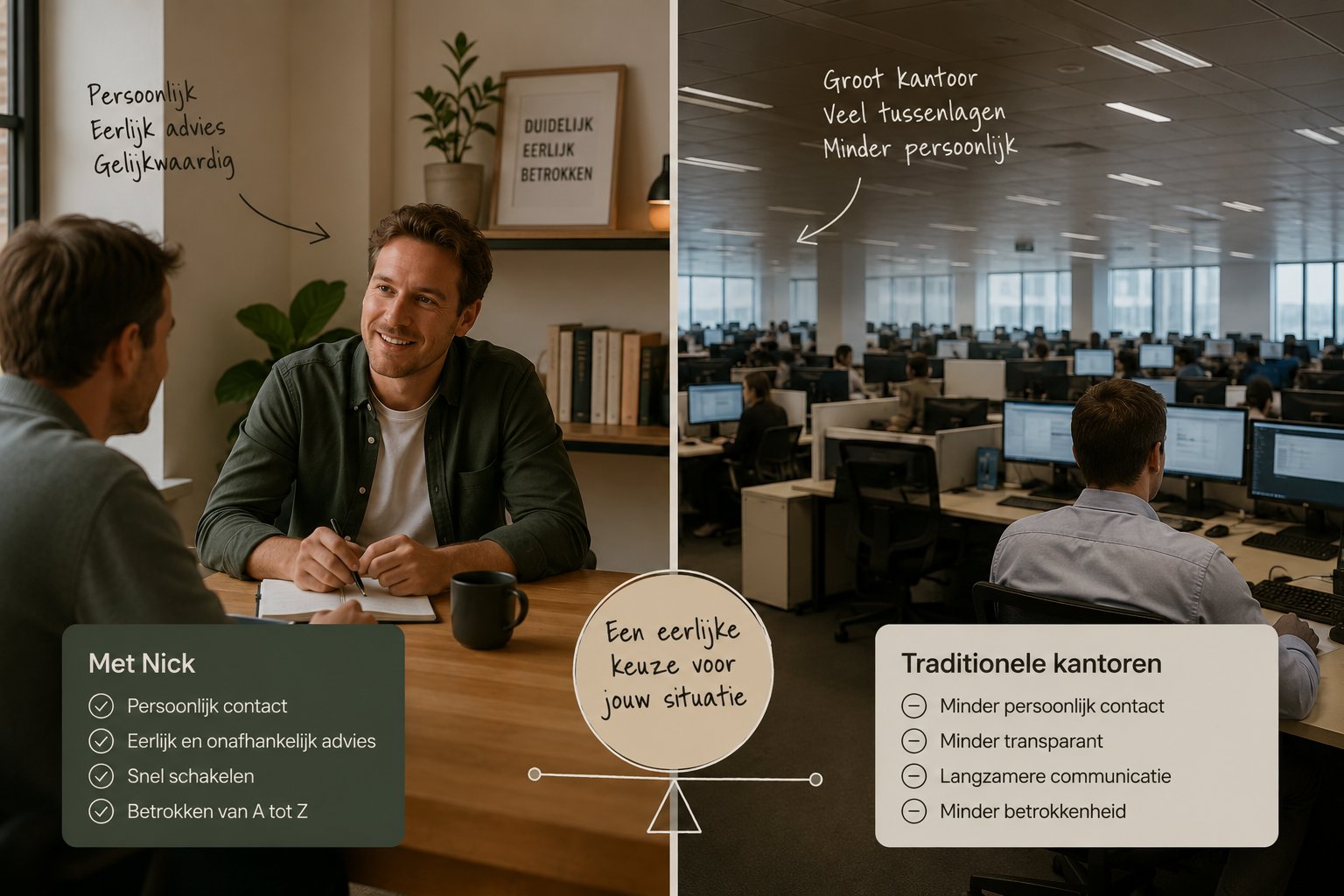
- The feeling of being "passed on" instead of really known
- Slow communication or many links at a large agency
These are real downsides, and they differ strongly per intermediary. An engaged, transparent party prevents most of them. An intermediary who only makes the match and then disappears delivers exactly the frustration that puts freelancers off. The quality of the intermediary makes the difference.
Do you give up rate and freedom?
Less than many people think. With the intermediary construction you keep your rate; the fee is passed on to the client. So you do not automatically give up margin. And you stay an independent entrepreneur with your own freedom, because an intermediary does not become an employer and does not determine how you work.
What you do "give up" is a bit of autonomy in your acquisition: you are partly dependent on which assignments the intermediary brings in. That is why many freelancers work with more than one channel, so they are never fully dependent on one party. That way you combine the ease with keeping control.
For whom does it work?
Working via an intermediary fits well if you prefer working to acquiring, want a stable flow of assignments, and value certainty on compliance. Also as a starter without a large network, an intermediary can get you assignments faster than you would manage yourself. You buy ease and certainty.
It works especially well if you find an intermediary who is transparent, knows your work and stays engaged. That personal click and honesty largely determine whether the experience is positive. A good intermediary feels like a partner, not a pass-through.
For whom does it not work?
If you have a strong network, enjoy acquisition and easily find good assignments yourself, an intermediary adds little. Then you give up a fee or a bit of autonomy for something you already arrange well yourself. In that case you are better off working directly.
It also does not work if you encounter an intermediary who is not transparent or engaged. Then you get the downsides without the benefits. So be critical in your choice: ask about the fee, about what they do after the match, and whether they really understand your work. A wrong intermediary is worse than none.
Frequently asked questions about working via an intermediary
Is working via an intermediary worth the fee?
That depends on what your time and certainty are worth. If you save a lot of acquisition time and get a more stable flow, the fee often pays for itself. With the intermediary construction you also keep your rate. For those who enjoy acquiring and have a strong network, the fee weighs more heavily.
Do I keep my freedom if I work via an intermediary?
Yes. An intermediary does not become an employer and does not determine how or when you work. You stay an independent entrepreneur with your own rate and method. What you partly give up is autonomy in your acquisition, because you depend on the assignments the intermediary brings.
How do I recognise a good intermediary?
By transparency and engagement. A good intermediary is open about the fee, knows your work, brings suitable assignments and stays reachable after the match. Ask about this before working together. A party that is vague about the fee or disappears after the match is a red flag.
Can I work via several intermediaries at once?
Yes, and many freelancers do precisely that to avoid depending on one party. Just make sure you are not proposed to the same client via two intermediaries, as that causes confusion. A mix of channels gives you the most stability.
Does an intermediary work for starters too?
Certainly, especially for starters without a large network it can be valuable. An intermediary gets you assignments faster than you would manage yourself, and arranges compliance. A sought-after profile is an advantage, though; the scarcer your skills, the easier an intermediary places you.
Conclusion: it stands or falls with the quality of the intermediary
Working via an intermediary gets you time, a more stable flow of assignments and certainty on compliance, without giving up your independence or, with the intermediary construction, your rate. The downsides, fee and partial dependence, are real, but stand or fall with the quality of the intermediary.
For whom does it work? For IT professionals who prefer working to acquiring, want a stable flow, or as a starter seek a helping hand. For whom not? For those with a strong network who enjoy acquiring, or who encounter a non-transparent intermediary.
My honest advice: choose a transparent, engaged intermediary who knows your work, and possibly work with more than one channel. Then you get the benefits without being fully dependent. A good intermediary is a partner, not a pass-through.
Curious how working via Maedium feels?
Want to spar freely about whether working via an intermediary suits you, and how I approach it? Plan a call with me. I think along peer-to-peer, honestly and without talking you into anything.
Want to join Maedium for assignments that fit your profile? See how to register.
Note: regulations around the Dutch DBA Act may change. For current information, consult rijksoverheid.nl or belastingdienst.nl. If in doubt about your situation, I advise consulting an employment lawyer or tax advisor.