You are a good IT professional, but how do you find assignments that fit you? Do you put yourself on a platform, use your network, or let an intermediary search for you? Each channel has its own strengths and weaknesses.
In this article I line up the five main ways to find IT assignments as a freelancer. For each channel you read the honest pros and cons and who it suits. That way you build a flow of assignments that fits your way of working.
This blog is for IT professionals working as freelancers: cloud, network, DevOps and security engineers.
Honest disclosure: Maedium is itself an IT intermediary, so one of the channels below is my own trade. I therefore also honestly name when another channel suits you better.
What ways are there to find IT assignments?
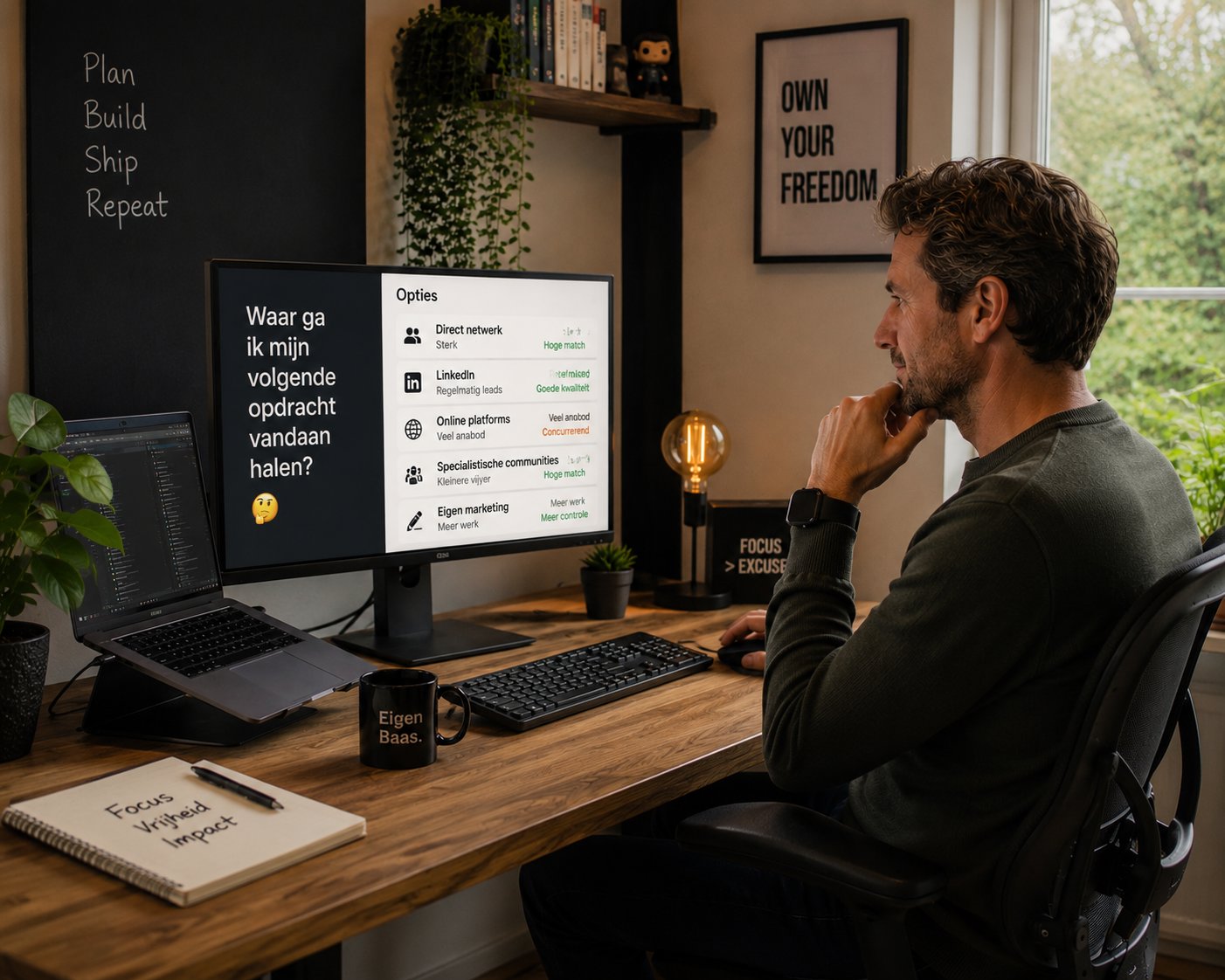
There are roughly five channels: your own network, professional network platforms, freelance marketplaces, staffing agencies, and specialised intermediaries. They differ in effort, rate, certainty, and how much they take off your hands around acquisition and compliance.
Below I walk through them one by one. No channel is the best; it depends on how much you want to acquire yourself, what rate you aim for and how much certainty you seek.
[Heading H2]
1. Your own network
Assignments via your own network and recommendations are often the nicest: warm contact, a good rate and no middleman. The downside is that your network is finite. If assignments dry up, you have to get to work yourself to make new contacts.
Advantages
- High rate: no fee for a middleman
- Warm assignments through trust and recommendations
- Direct line with the client
Disadvantages
- Finite: your network runs out eventually
- You do all acquisition and admin yourself
- No help with Dutch DBA Act compliance
Suits: experienced freelancers with a strong network who enjoy their own acquisition.
2. Professional network platforms
On professional network platforms you make yourself findable and are approached by clients and recruiters. The reach is large. The downside: you get a lot of noise, not every approach is serious, and you have to actively profile yourself to stand out.
Advantages
- Large reach; clients find you
- You build a visible professional profile
- No fee for a middleman
Disadvantages
- A lot of noise: not every approach is serious or relevant
- You have to actively profile and maintain yourself
- No help with contracts or compliance
Suits: freelancers willing to work on their online profile and filter themselves.
3. Freelance marketplaces
On freelance marketplaces you respond to posted assignments yourself or get matched. You quickly see what is happening in the market. The downside: there is a lot of competition, which can pressure your rate, and you arrange compliance yourself.
Advantages
- Many assignments in one place, quick overview
- Handy to fill gaps in your schedule
- You see directly which rates and roles are in demand
Disadvantages
- Lots of competition, sometimes downward pressure on your rate
- You carry the Dutch DBA Act risk yourself
- Little personal guidance
Suits: freelancers seeking a quick assignment who want to filter and negotiate themselves.
4. Staffing agencies
With a staffing agency you sometimes become employed or part of a fixed pool, and they place you with clients. This gives certainty and a steady flow of work. The downside: your rate and freedom are lower, and you are less your own boss.
Advantages
- Certainty: often a continuous flow of assignments
- Less own acquisition needed
- Compliance and contracts are arranged
Disadvantages
- Lower rate and less freedom
- You are less your own boss
- Often employed, so no pure freelance status
Suits: IT professionals who put certainty and support above maximum freedom and rate.
5. Specialised IT intermediaries
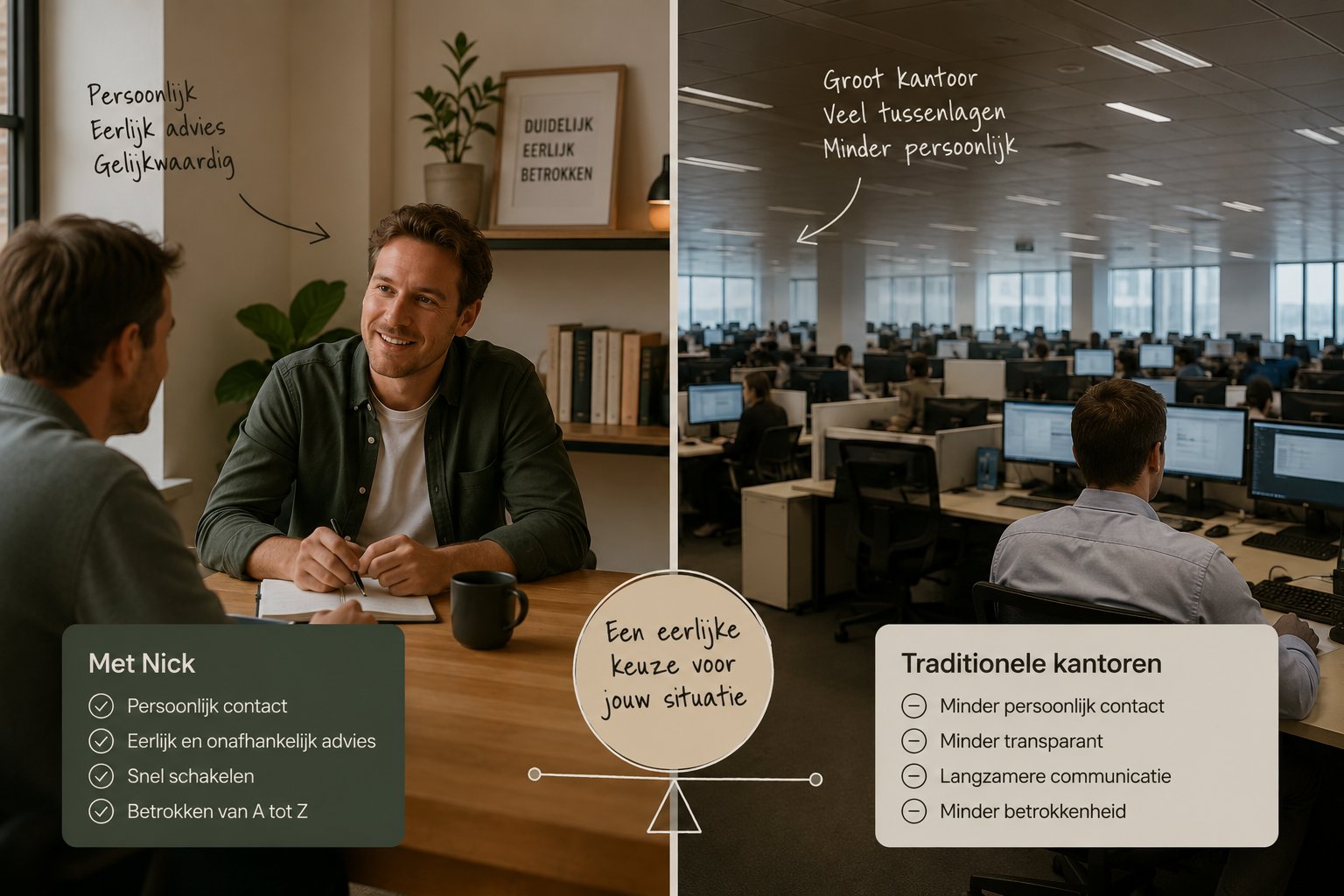
A specialised intermediary finds assignments that fit your profile and arranges the match, contracts and compliance. You keep your independence and your rate, and they do the acquisition. The downside: a fee is involved, and you depend on their flow of assignments.
Advantages
- Assignments that fit your profile, without hunting yourself
- You stay an independent entrepreneur with your own rate
- Compliance arranged; with the intermediary construction they carry the risk
- A personal point of contact who knows your work
Disadvantages
- A fee is involved (settled within the construction)
- You depend on the intermediary's flow of assignments
- Quality differs strongly per intermediary
Suits: freelancers who want to work rather than acquire, and want certainty on compliance without giving up their independence. Want to know whether direct or via an intermediary suits you better? Read our comparison. (→ internal link 1)
Which way suits you best?
There is no universal winner. Have a strong network and enjoy acquisition, start there. Want large reach, work on your profile on platforms. Seek a quick assignment, look at marketplaces. Want certainty, think of secondment. Want to work without hunting, while keeping independence, then an intermediary fits.
Most successful freelancers combine channels. You maintain your network, are findable on platforms, and work with one or two intermediaries for a stable flow. Spread makes you less vulnerable if one channel dries up, and it helps your Dutch DBA Act position because you keep multiple clients.
Frequently asked questions about finding assignments
What yields the highest rate?
Directly via your network usually yields the highest rate, because there is no middleman. Note: you pay with your own time for acquisition. An intermediary costs a fee, but saves you that time and often yields a more stable flow.
How do I find assignments without acquiring myself?
Via an intermediary or staffing agency. They do the acquisition and place you with clients. The difference: with an intermediary you stay independent with your own rate, with a staffing agency you often become employed with more certainty but less freedom.
Is working via an intermediary bad for my rate?
Not necessarily. With the intermediary construction you keep your rate; the fee is in the construction and passed on to the client. So you do not automatically lose out. Always ask the intermediary transparently how the fee and your rate relate.
Does spreading across channels help my Dutch DBA Act position?
Yes. Working for multiple clients via different channels is a strong signal of entrepreneurship. It reduces the chance of being seen as a disguised employee. One client with nearly all your revenue is, by contrast, a risk signal.
Can I use several channels at once?
Yes, and it is wise. Many freelancers combine network, platforms and one or two intermediaries. That way you always have a backup if one channel stalls. Just make sure you do not end up at the same client via two parties.
Conclusion: build a mix that fits you
The best way to find IT assignments does not exist apart from you. Your network gives the highest rate but is finite. Platforms and marketplaces give reach but cost time. Secondment gives certainty, an intermediary gives assignments without hunting, while keeping independence.
What counts for whom? If you like acquiring and have a network, do a lot yourself. If you mainly want to work on nice assignments without hassle, lean on an intermediary. The best is usually a mix, for stability and a strong Dutch DBA Act position.
My advice: do not put everything on one channel. Spread gives you peace of mind, a higher average rate, and a stronger entrepreneur profile.
Looking for assignments that fit you?
Want to spar about how to find stable, good assignments, or how Maedium can search for you? Plan a no-obligation call with me. I think along peer-to-peer.
Want to join Maedium and receive assignments that fit your profile? See how to register.
Note: regulations around the Dutch DBA Act may change. For current information, consult rijksoverheid.nl or belastingdienst.nl. If in doubt about your situation, I advise consulting an employment lawyer or tax advisor.